
In 100 days from Friday, paper air tickets would be history as airlines across the world move to 100 per cent e-ticketing from June 1, 2008, a target many in the travel world initially thought would be difficult to meet.

A Lancet report reveals a significant increase in deaths attributable to PM2.5 pollution in India, with fossil fuels being a major contributing factor. The report highlights the economic and health consequences of air pollution and the urgent need for a transition to cleaner energy sources.
Most reported unruly passenger incidents were classified as level 1, or intentional non-compliance with safety regulations like not wearing face masks, not wearing seat belts.

'AAIB preliminary report was more detailed than most people were expecting.'

Embraer sees a lot of opportunities in India in the commercial and business jets as well as military aircraft and eVTOL segments, its CEO Francisco Gomes Neto has said as the Brazilian seeks to strengthen its foot print in the fast growing Indian market. Besides, the company is in talks with IndiGo and Air India to explore the possibility of selling its E-2 aircraft, which can have up to 146 seats.

In a letter to US Homeland security secretary Janet Napolitano, IATA's director general Giovanni Bisignani said 'the air transport system cannot support 100 per cent pat-down searches over the long term' even though short-term temporary and extra-ordinary security measures were needed until the immediate threat had abated.
Experts warn that air pollution in India is a major public health crisis, leading to a surge in undiagnosed airway diseases and cardiovascular issues. They urge for urgent action, early detection, and treatment.
Giovanni Bisignani, CEO of International Air Transport Association, said Delhi and Mumbai airports were one of the worst contributors to the crisis, for their 207 per cent hike in charges. "There is no room for this nonsense in our future. When demand drops, suppliers cannot divide the same costs among fewer customers. The shape of everything must change," he declared.

Following a significant power outage, operations at the London Heathrow (LHR) have been suspended till 2359 hours (local time) on March 21 (05.30 am March 22, IST).
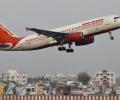
Air India has ordered 470 aircraft to serve the Indian economy and is set to receive a new aircraft every six days over the next 18 months, CEO and MD Campbell Wilson said on Friday. He was speaking at the 67th Assembly of Presidents of the Association of Asia Pacific Airlines here. "We have new aircraft, we are recruiting many, many new crew and staff, improving the training regime and there is more work to do and we are making good progress," he said.

Donald Trump's inconsistent statements and actions regarding the conflict with Iran have drawn criticism and confusion, raising questions about American credibility and the direction of US foreign policy.

Aviation expert Captain Mohan Ranganathan claims human error led to the Air India plane crash and calls for more transparency in the AAIB's preliminary report.
Let's take a look at some of the best airports in the world.

Profit will grow from $4.6 billion in 2009 to a forecast figure of $7.5 billion for 2013 with Asia Pacific and Middle East based airlines dominating the international passenger market.
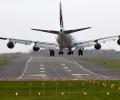
The government has decided to restart scheduled international flight services from March 27 after a two years hiatus due to COVID-19, according to civil aviation ministry officials.

The 'rescue' operation occurred within kilometres of Iran's underground tunnel complex at Isfahan, assessed by the IAEA and US intelligence as holding a substantial portion of the country's 60 per cent enriched uranium stockpile. Retired senior US military officers have highlighted that the mission's footprint -- hundreds of special operators, multiple heavy-lift aircraft deep inside Iran -- appears outsized for recovering a single airman. Prem Panicker continues his must read blog on the Iran War.

Despite the bullishness associated with India, IATA has flagged taxation and fuel charges as key areas of concern for the aviation industry in the subcontinent, which is among the fastest growing in the world.
Airlines worldwide will continue to be in the 'red' because of the global meltdown and may take more than three years to recover, an international aviation group said warning that the epicentre of the crisis is now in Asia.

Tony Tyler, director general and chief executive officer of the International Air Transport Association, a global industry trade body, says the European Union-Emission Trading Scheme is a regional programme, which cannot be imposed on the rest of ther world.

Growth in world trade has also slowed, with declines in both European imports and exports standing out in second quarter.Business confidence has reversed the upward movement seen earlier in the year, declining for the past 4 months, the world airline body said.
The new greenfield airports should not charge different user development fee from domestic and international travelers and such charges should be regulated by a regulatory authority, global airlines body International Air Transport Association said on Tuesday.
The existing system where all airline passengers, barring VVIPs, have to undergo rigorous frisking, the IATA model proposes different levels of screening for passengers based on the level of risk associated with each one of them.

The government has recently decided to infuse equity worth Rs 800 crore (Rs 8 billion) in the first tranche into Air India, which has a paid-up equity base of just Rs 145 crore but has ordered aircraft worth Rs 40,000 crore (Rs 400 billion).

Global airlines' body International Air Transport Association on Tuesday asked the government to improve infrastructure and cut costs and 'excessive' taxation on aviation, saying it could be done by preparing a national aviation policy in India.

Quoting global financial indexes, IATA said global airlines, including those from Asia, showed an upward trend since late September with European airlines' shares experiencing the strongest rise, up 55 per cent.
IATA has said that airlines globally were 'prepared for the heightened level of alert' following the World Health Organization's decision to move to Phase 5 of its pandemic preparedness plan. The global airlines body and the WHO have prepared guidance materials for the airline staff, including cabin crew, maintenance workers, cleaners, passenger agents and cargo and baggage handlers.
The International Air Transport Association on Tuesday criticised the increase in airport development charges imposed by Mumbai and New Delhi, saying the burden on the already beleaguered global airline industry is a 'wake up call' for the Indian government.
The airlines worldwide may collectively lose a whopping $9 billion in 2009, a key aviation body said in its forecast, nearly doubling its March estimate of $4.7 billion loss, spelling a rapidly deteriorating revenue environment for the industry.
The government has approved the levy of development fee at Mumbai International Airport. An airport development fee of Rs 100 will be charged from outbound domestic passengers and Rs 600 from international passengers.

Painting a gloomy picture, the International Air Transport Association (IATA) on Friday said the Indian aviation industry is estimated to suffer a collective loss of $1.5 billion in 2009, with Air India accounting for most of it.
In its report, the International Air Transport Association said that in 2009 intra-Asia-Pacific travellers numbered 647 million compared to 638 million who travelled within North America, including domestic markets.
The forecast represents a 54 per cent fall compared to estimates put out by the trade body in March, and is 78 per cent lower than the $18-billion profit that the industry recorded in 2010.

International Air Transport Association, which had suspended it from its Clearing House on Wednesday, said Kingfisher has been suspended from participating in the global airline body's Billing and Settlement Plan and Cargo Accounts Settlement System.

Indian aviation has deep-rooted problems that need comprehensive and coordinated solutions, and high aviation turbine fuel pricing is certainly the most urgent.
A volcano named 'Eyjafjallajoekull' has spread havoc across Europe hitting businesses across the world.
The airline industry will suffer a $2.5bn net loss next year despite the big fall in the oil price, as carriers are overtaken by falling demand for air travel amid the deepening recession in several leading economies.

Though the civil aviation sector accounts for only two per cent of the global carbon emission, the industry has conducted sufficient research on the usage of alternative fuels, from the prospective of both environment and cost.
Domestic air traffic demand in India grew by around 14 per cent with the airlines enjoying an average load factor of almost 79 per cent in May compared to last year, even as the global traffic rose by 6.8 per cent.
